Direct-to-Product Digital Printing with Flame & Plasma Treating Creates Decorating Advantages
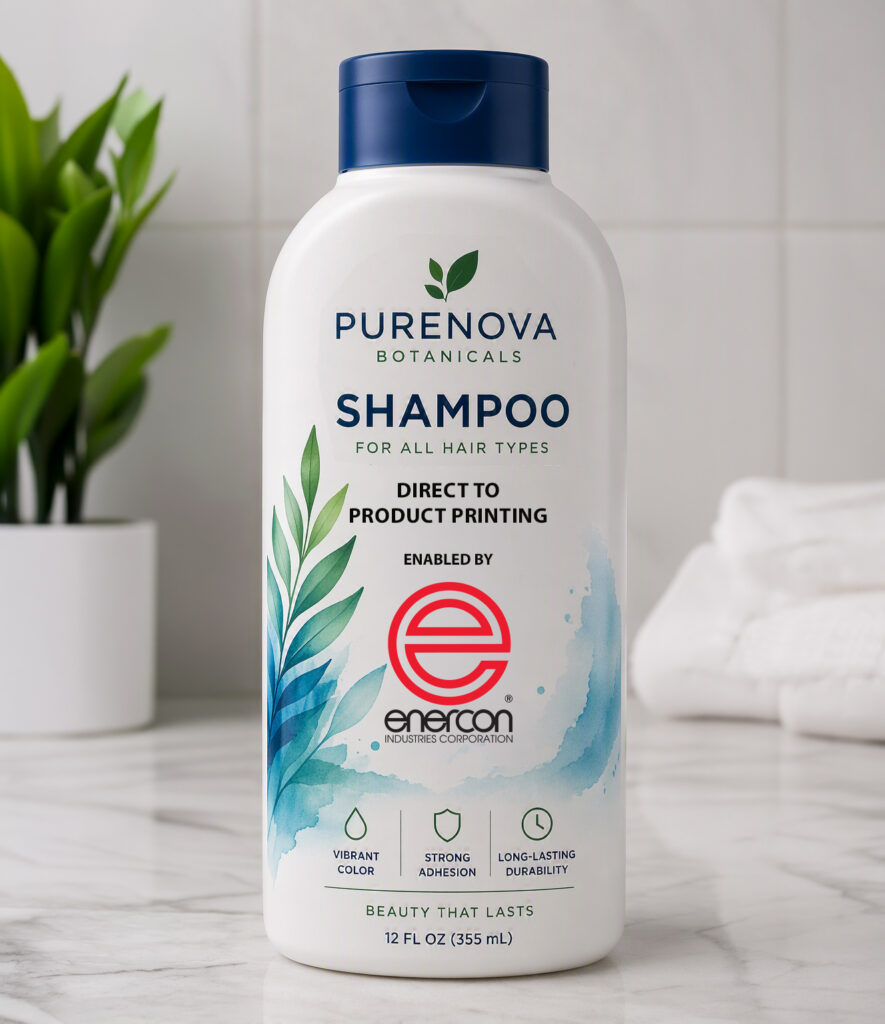
Direct-to-product printing is on the rise as manufacturers look to take advantage of digital printing production benefits and capture an upscale, no-label look for their products. Direct printing enables quick changeovers and on-demand production, while helping to reduce inventory requirements, eliminate the cost of pre-printed labels and reduce waste. Applications range from high-volume consumer packaging to custom promotional products, decorative surfaces, and engineered flooring materials.
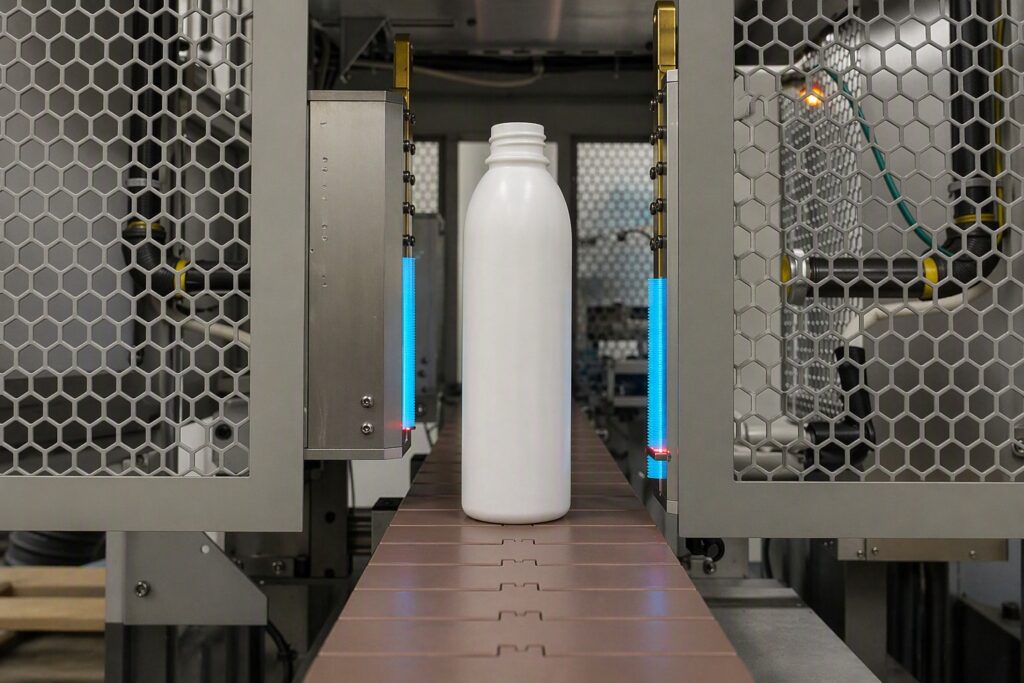
Both inkjet and thermal printing technologies are used for direct-to-print applications. And the materials being printed on are quite diverse. Consumer goods are often packaged in polyethylene (PE) and polypropylene (PP) containers, while decorative flooring products may include PVC, vinyl, and laminated structures. Direct printing is also used on a variety of specially engineered materials.
Regardless of the printing technology or substrate, successful printing depends on creating a surface that is receptive to inks. This is where Enercon flame and plasma surface treaters are used.
Many materials used in modern manufacturing have inherently low surface energy. In addition, contaminants and additives that migrate to the surface can inhibit wettability and adhesion. Left untreated, these conditions can compromise print quality and long-term durability.
Flame and plasma surface treatment technologies prepare surfaces through cleaning, etching, and functionalization. Cleaning removes organic and inorganic contaminants. Etching creates additional bonding sites. Functionalization increases surface energy and introduces polar groups that improve wettability and ink adhesion.
Is Plasma or Flame Surface Treating Better?
The answer? It depends on your application.
Flame treatment is often selected for larger treatment areas, heavily contoured products, and high-speed production environments. Plasma treatment is commonly used when treating smaller surface areas, moderate-speed processes, or applications requiring precise treatment of specific print locations.
For roll-to-roll films and sheet materials, corona treatment is often the preferred solution. Matching the treatment technology to the substrate, print process, and production requirements helps ensure consistent print quality, durable adhesion, and efficient operation.
How long does treatment last?
Depending on the material and the environment, the effect of treatment can last for weeks, days, or minutes. Many manufactures will set up their operations to treat in-line immediately prior to printing to ensure surfaces are optimized for ink adhesion. In some cases, treatment lasts long enough for containers to be treated off-line and then printed on later.
Enercon’s application specialists help manufacturers establish which technology will be best for their application and how long treatment will last. Free lab testing and application consulting are complementary.
For more info, contact us today to explore how surface treatment technologies can help optimize your operations.