

Can you use Watt Density to Predict Dyne Levels?

The ultimate goal of any surface treatment system is to increase surface tension measured in dynes which then increases the wettability and adhesion characteristics of the surface. This allows you to add value to the substrate through printing, laminating, coating etc.. Corona treating systems achieve this by applying a given level of power over a…
Read MoreTips for maximizing the life of your ceramic electrodes

Ceramic electrodes are used extensively in the converting industry for creating corona to improve the surface energy of conductive and nonconductive films and foils. These rugged electrodes are designed to survive the cauldron of heat, ozone and electrical discharge created by the corona treating process. To ensure the electrodes continue to perform as designed operations…
Read MoreHow Bump Corona Treating Improves Laminating, Coating & Printing
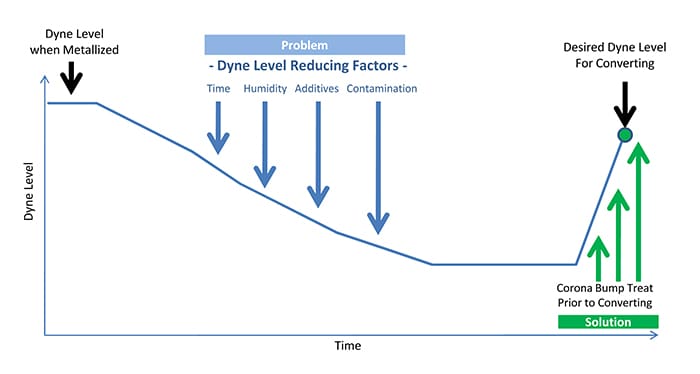
Whose responsibility is it to make sure a film is ready to be converted? Film supplier or Converter? Depending on what part of the world you are in this question can spark an inspired debate. Both the film supplier and the converter are in business to make money. When printing, coating & laminating applications go…
Read MorePattern Corona Treating Offers Flexibility for Pouches & Bags

Corona treatment is widely used by flexographic printers to control surface energy for successful ink adhesion. In most cases, treating the entire width of the web is required. However applications requiring selective treatment are becoming more popular. Printing Stand-up PouchesStand-up pouches are made up of non-porous barrier films which require treatment prior to printing. However, corona…
Read MoreMaintain or reinvest in a corona treater? What’s a converter to do?

Can you afford to maintain your old surface treater? Your organization has probably seen its share of downsizing. And your resources are spread about as thin as can be. As you look to do more with less it can be a difficult time to justify an investment in new equipment. But how much is that…
Read MoreGet a New Corona Treater Power Supply & Let New Technology Safeguard Uptime
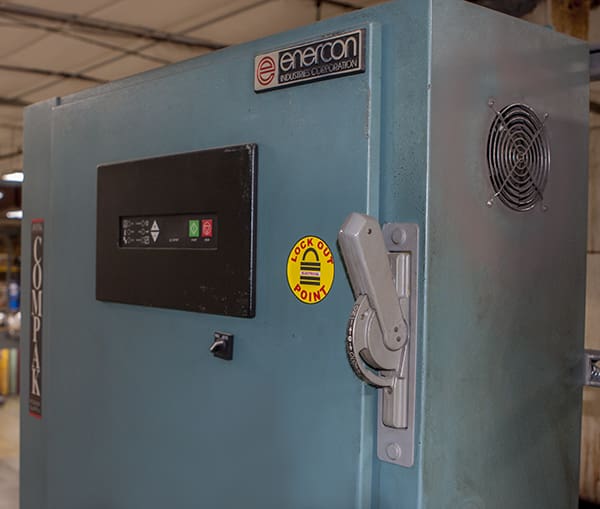
Chances are you have some older surface treating equipment in your plant that may be nearing the end of its useful life. Replacing an entire corona treater system is a sizable investment, so many companies choose to replace the power supply first. Electronic equipment becomes obsolete faster than mechanical, so this can be an economic option…
Read MoreWhy All Films Do Not Treat the Same

The Signature Relationship Between Your Film and Corona Treaters How well do you understand the relationship between your films and your corona treater? A treatment level of 2.0 watt density yields very different results on PET compared to Polypropylene. And, a nominal change in watt density can produce unexpected results. This paper looks at the…
Read MoreWhich Surface Treating Technology is Best for my Application?

Corona, Plasma or Flame? Surface treating in the converting industry is used to improve the adhesion of engineered films and foils that would otherwise be unreceptive to bonding with inks, coatings, and adhesives. As the only industry supplier who manufactures corona, plasma and flame treatment technologies, Enercon Industries Corporation offers unique insights on how these…
Read MoreProper Dyne Testing Methods: Buddy, Can You Spare a Dyne?

Dyne Tests Only Work When You Do Them Right Dynes are used to measure changes in a film’s surface energy. But poorly executed dyne tests produce unreliable results. And false assumptions about dyne levels, adhesion and corona treating leads to major problems. This insightful technical paper reviews best practices for dyne pen, cotton swab, and…
Read MoreTAPPI Mayer Rod Drawdown Dyne Testing

The Mayer Rod Drawdown Method is an industry standard under TAPPI Test Method T 552: Determination of Wetting Tension of Polyolefin Films and Coated Surfaces via the Mayer Rod Technique. How to apply:A substrate sample, usually measuring 8-1/2 x 11 inches, is clamped to a clipboard. At the top of the sample, a single drop…
Read More